Most people handle a $20 bill without ever really seeing it. Beyond Andrew Jackson’s portrait and the familiar green-and-black design, the imagery feels purely decorative at first glance. But tucked into those fine lines and symbols is a detail that has sparked curiosity for decades: the bow-and-arrow–like imagery associated with the eagle and its weapons. This symbol isn’t random, and it isn’t just artistic flair. It traces back to early American ideas about power, defense, and the uneasy balance between peace and force that helped shape the nation itself.
The imagery originates from the Great Seal of the United States, which strongly influences modern U.S. currency produced under the authority of the United States Department of the Treasury. On the reverse symbolism echoed across American money, the eagle traditionally clutches arrows in one talon and an olive branch in the other. While not literally a bow-and-arrow weapon, the arrows represent military readiness and collective defense. In early American iconography, arrows were commonly bundled together to symbolize unity—one arrow can break, but many together are strong. The concept quietly reinforces the idea that the nation survives through cooperation and shared strength, not individual force alone.
The placement of these symbols is just as important as their meaning. The eagle faces the olive branch rather than the arrows, signaling a national preference for peace over conflict. This design choice was intentional and deeply political when first adopted. Early leaders wanted a visual message that the United States was prepared to defend itself, but not eager to wage war. Even today, that silent message travels from hand to hand every time a $20 bill changes owners, unnoticed by most but still doing its symbolic work.
What makes the bow-and-arrow symbolism so fascinating is how it reflects a tension that still exists today. The United States presents itself as peaceful, lawful, and diplomatic—yet always armed with the means to respond if threatened. That dual identity is encoded directly into the money people use every day. So the next time you pull a $20 from your wallet, take a second look. That small, easily ignored symbol is a reminder that American currency isn’t just about value—it’s also about history, ideology, and the quiet messages nations leave behind for those who know where to look.

Related Posts

I Took My Son to Practice — Then I Saw His Coach and Froze
My teenage son Daniel had finally found joy again through soccer after a difficult few years following his father’s departure. He talked endlessly about his new coach,…

Can You Find the Small Detail Hidden in This Hospital Scene?
Many images appear completely ordinary at first glance. Familiar surroundings, recognizable objects, and a calm setting often convince us that everything in the picture is exactly as…

Four Women in a Sauna—What Happened Next Will Surprise You
Four women were relaxing in a sauna, each wrapped modestly in a towel. Two were younger, one was middle-aged, and the last was a feisty senior citizen….

How One Selfless Student Made a Difference in a Critical Moment
It was 2 a.m. on an empty road when everything went wrong. Our car died without warning, leaving us stranded in complete silence, surrounded by darkness and…

My Dad Turned My Mom’s Gown Into My Prom Dress—Then Came the Twist
I wore a prom dress my father made from my late mother’s wedding gown, and for a moment, it felt like she was with me. At first,…
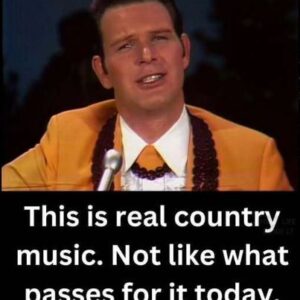
This 1966 Hit Broke Records and Redefined Country Drama
“Almost Persuaded” by David Houston stands as one of the most influential songs in country music history, blending deep storytelling with major chart success. Released in 1966,…